

A Read API retrieves data without changing the source. A Write API creates, updates, or deletes data in a target system. Both run over HTTP or HTTPS. Both use the same authentication patterns. The difference is direction. One pulls. The other pushes.
That distinction shapes everything else: which HTTP methods you use, how strictly you secure the endpoint, how aggressively you cache responses, and how cautiously you grant API keys. It also shapes the kind of crypto product you can build. A portfolio tracker only needs read access. A trading bot needs write access too, which makes the security stakes far higher.
This guide breaks down the differences, the HTTP method conventions defined in RFC 9110, the use cases that fit each model, the security implications, and the framework for picking the right type for your project.
What Is a Read API?
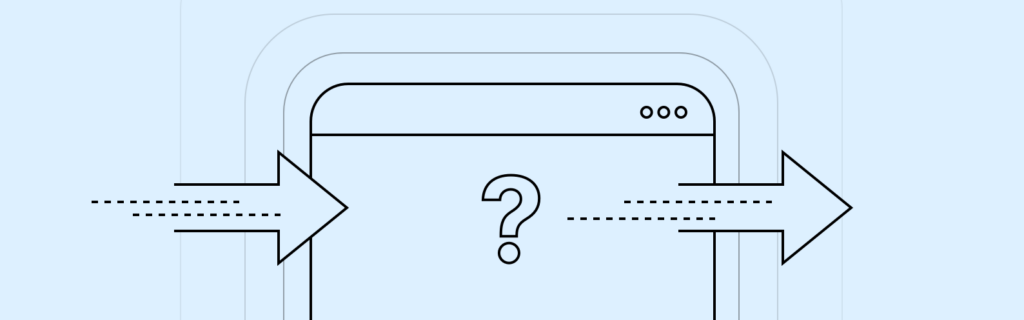
A Read API is an interface that retrieves data from a source without modifying it. The defining trait is that it is non-destructive. You can call a Read endpoint a thousand times and the underlying data does not change.
Per RestfulAPI.net’s HTTP methods reference, GET, HEAD, OPTIONS, and TRACE are classified as “safe methods” because they are read-only by design. The HTTP specification, formalized in RFC 9110, defines a safe method as one whose semantics are essentially read-only. Clients calling these methods do not request, and do not expect, any state change on the server.
Read APIs power most of what users see on the web. A weather app calling a forecast API. A portfolio dashboard fetching wallet balances. A search engine pulling indexed pages. A news aggregator listing fresh articles. None of these change the underlying source. They display it.
The five defining features of a Read API are:
- Data retrieval. The core function is pulling data, whether that data is JSON, XML, images, or video.
- Non-destructive operation. Calling the endpoint never alters the source.
- Information discovery. Read APIs are the primary tool for exploring what exists in a system.
- Reporting and analytics. Dashboards, BI tools, and ML pipelines all run off Read APIs.
- Search and filter. Most Read endpoints accept query parameters that narrow results.
What Is a Write API?
A Write API is an interface that creates, updates, or deletes data in a target system. The defining trait is the opposite of Read: every successful Write request changes the underlying state.
The HTTP methods that map to Write operations are POST (create), PUT (full replace), PATCH (partial update), and DELETE (remove). Per API7’s HTTP methods guide, PUT replaces an entire resource with a complete new representation, while PATCH applies partial modifications, updating only the specified fields. The choice between them depends on whether clients send full objects or just the changed fields.
The five defining features of a Write API are:
- Data creation. Adding new records, like a new user, transaction, or order.
- Data modification. Updating existing records, like changing an email address or status.
- Data deletion. Removing records, with hard deletes (permanent) or soft deletes (audit trail preserved).
- Workflow automation. Triggering downstream actions when a Write succeeds.
- User interactions. Comments, likes, posts, and form submissions all flow through Write APIs.
Read API vs. Write API: Side-by-Side
The differences cluster across six dimensions: HTTP method, idempotency, side effects, caching, security risk, and typical use cases. The table below summarizes them.
| Dimension | Read API | Write API |
|---|---|---|
| Primary HTTP method | GET, HEAD | POST, PUT, PATCH, DELETE |
| State change | None | Always |
| Idempotent | Yes | PUT/DELETE yes, POST no |
| Cacheable | Yes, often aggressively | Rarely, response only |
| Security risk if compromised | Data exposure | Data exposure plus data loss or unauthorized actions |
| Rate limiting | Lighter limits common | Stricter limits standard |
| Typical use cases | Dashboards, analytics, search, portfolio trackers | E-commerce checkout, account management, trading, social posts |
Per the API7 HTTP methods guide, API gateways routinely apply stricter rate limits to write operations than to reads, and many gateways block unsafe methods like PUT and DELETE on public endpoints that should be read-only. That asymmetry is intentional. A failed read costs the user a stale screen. A failed or hijacked write costs money or data.
What Are the Common Features Both APIs Share?
Read and Write APIs share three foundations: HTTP/HTTPS transport, request-response patterns, and standardized authentication. The differences sit on top of these shared layers, not underneath them.
Both types use HTTP or HTTPS as the wire protocol. The TLS layer matters even more for Write APIs because the request body often contains sensitive payloads, but Read APIs need it too because authentication tokens travel in headers. Per Sanay Krishna’s HTTP methods security guide, each HTTP method should be protected, and PUT and DELETE should require strict authentication and HTTPS for encryption.
Both follow the request-response pattern. The client sends a request with headers, optional query parameters, and (for Write) a body. The server returns a status code, headers, and a response body. The difference is only what the server does between receiving the request and sending the response.
Both use the same authentication models: API keys, OAuth 2.0, JWTs, and signed requests. The permissions attached to those credentials are what enforce the read-only or write boundary, not the credential format itself.
Idempotency: The Concept That Splits Read and Write
Idempotency means that repeating the same request produces the same result, no matter how many times you send it. It is the property that lets clients retry safely after network failures, which is why it matters for API design.
Per the HTTP methods reference at RestfulAPI.net, GET is both safe and idempotent. PUT and DELETE are unsafe (they change state) but idempotent (repeating the same call produces the same final state). POST is neither safe nor idempotent because each call typically creates a new resource.
The practical implication for crypto APIs is concrete. A retry on a price-feed GET is harmless. A retry on a POST that places a buy order can produce two trades. A retry on a PUT that updates a webhook URL is fine because the second call lands on the same final state. A retry on a DELETE for a removed record returns 404 or 204 depending on policy, but the business outcome is identical.
Per ADevGuide’s HTTP methods explainer, the key idea is that repeating the delete should not create extra business damage beyond the first successful deletion. That principle applies to every Write endpoint that handles money or sensitive data.
What Are the Use Cases for Read APIs?
Read APIs power data aggregation, real-time market feeds, content consumption, analytics, and search. Each one requires reliable retrieval but no state change.
In crypto specifically, Read APIs are the foundation of portfolio aggregation. The Vezgo API is a read-only data aggregator that pulls balance, position, and transaction data across more than 300 exchanges, wallets, blockchains, and DeFi protocols. The full integration list and use cases sit on the Vezgo API use cases page.
The five highest-impact Read API use cases in 2026 are:
- Portfolio aggregation. Combining wallet, exchange, and DeFi balances into one view. The model behind tools like Wealthica and other Vezgo customers.
- Real-time market data. Live prices, volumes, and order book depth feeding dashboards and trading screens. This is also where WebSockets in crypto become relevant for streaming use cases.
- Content consumption. News feeds, blog APIs, and on-chain data exploration tools.
- Analytics and reporting. BI dashboards, risk reporting, and machine learning training pipelines.
- Search and discovery. From Etherscan-style block explorers to NFT marketplaces.
For developers building on top of Vezgo, the crypto data API page covers the endpoint structure, while the NFT API page covers the same model for non-fungible assets.
What Are the Use Cases for Write APIs?
Write APIs handle account management, e-commerce checkout, system integration, workflow automation, and user-generated content. Each one changes data in the target system.
The five most common Write API use cases are:
- User account management. Creating users, updating profiles, changing passwords, deleting accounts.
- E-commerce transactions. Cart updates, checkout, payment processing, order fulfillment.
- System integration. ETL pipelines, CRM sync, ERP updates, webhook handlers.
- Workflow automation. Triggering follow-up actions when a state change occurs.
- Social interactions. Posts, comments, likes, follows, direct messages.
In crypto, Write APIs are what trading bots, exchange front-ends, and DeFi front-ends use. A trading bot calling a Write endpoint on Binance places a real order. A DEX front-end submitting a transaction triggers a real on-chain settlement. Per the Coinpaprika API key guide, exchanges classify API keys by permissions, with separate scopes for read-only, trading, withdrawal, and account management access.
Security Implications: Why Read-Only Keys Matter for Crypto
For crypto products, the read versus write distinction is also a security boundary. A compromised read-only key exposes data. A compromised write or withdrawal key can drain funds.
Per Vantixs’ 2026 trade-only API key guide, trade-only API keys are the single most important security decision for automated crypto trading. The principle of least privilege says you should grant the minimum permissions a system actually needs. For portfolio trackers and tax tools, that means read-only.
Per Darkbot’s 2026 API key security analysis, exchanges typically expose three permission tiers:
- Read-only. View balances, order history, market data. Cannot place trades or withdraw.
- Trading. Place, modify, and cancel orders. Usually cannot withdraw.
- Withdrawal. Transfer funds to external wallets. The highest-risk tier.
The security recommendation across major sources is consistent. Per Coinpaprika, exchanges recommend that portfolio trackers and tax tools use only read-only keys. Per CoinSwitch’s 2026 exchange API guide, retail users should not enable withdrawal permission at all in most cases.
Five practical security rules apply to every Write API integration:
- Disable withdrawal permission unless absolutely required. A compromised key without withdrawal access cannot drain the account.
- Use IP whitelisting where the exchange supports it. This locks the key to specific server addresses.
- Rotate keys on a schedule. Quarterly is a sensible default; monthly for high-value systems.
- Never commit keys to version control. Use secret managers, environment variables, or vaulted storage.
- Apply per-method rate limits. Stricter on Write endpoints than Read endpoints.
This connects to broader DeFi smart contract risk monitoring and wallet risk scoring workflows that operate on the same principle: minimize the blast radius of any single credential or contract.
How Do You Choose Between Read API and Write API for a Project?
The choice depends on four factors: what your application does, who controls the data source, how sensitive the data is, and how scalable the design needs to be. Most production applications use both, but the split is rarely 50/50.
A pure portfolio tracker is read-heavy. It mostly fetches balances, prices, and transaction history. The Write surface is small: maybe a webhook subscription or a user preference update. Vezgo’s read-only model fits this category.
A trading platform is write-heavy. Every order, cancel, and position update is a Write call. Reads still happen for market data and balances, but Writes drive the business logic. The security envelope around those Writes is the entire product.
A tax tool is read-heavy with light writes. It pulls full transaction history (Read), categorizes the data, and writes the user’s preferences and saved reports (Write). The Read surface is much larger than the Write surface.
A neobank that adds crypto features is mixed. Fiat banking has heavy Write traffic for transfers and payments. Crypto data layered on top is Read-heavy through aggregators like Vezgo, then Write-heavy when users actually move funds. This is the model behind the convergence covered in crypto banking vs. digital banking.
How Does Vezgo Fit Into a Read API Architecture?
Vezgo is a read-only API that aggregates balance, position, and transaction data across more than 300 exchanges, wallets, blockchains, and DeFi protocols. The read-only design is a feature, not a limitation. It means a compromised Vezgo integration cannot move user funds.
Through one Vezgo integration, developers retrieve normalized data across CEXs, DEXs, on-chain wallets, and NFT marketplaces. The same API supports related workflows like crypto wallet APIs for developers and businesses, portfolio and exposure risk monitoring, and the broader Vezgo API use cases that span lending, tax, accounting, and compliance products.
Security is built into the read-only architecture. Financial information links only to anonymous UUIDs. SOC 2 Type 2 compliance and AES-256 encryption back the data path. Vezgo never requests withdrawal permissions from users, and Vezgo staff cannot access private user data without explicit permission. Pricing starts with a Free-to-Try plan and scales through usage-based tiers, all on the Vezgo pricing page.
For teams building portfolio trackers, tax tools, or analytics dashboards, Vezgo handles the Read layer so the engineering team can focus on the Write logic specific to their product.



Leave a Reply